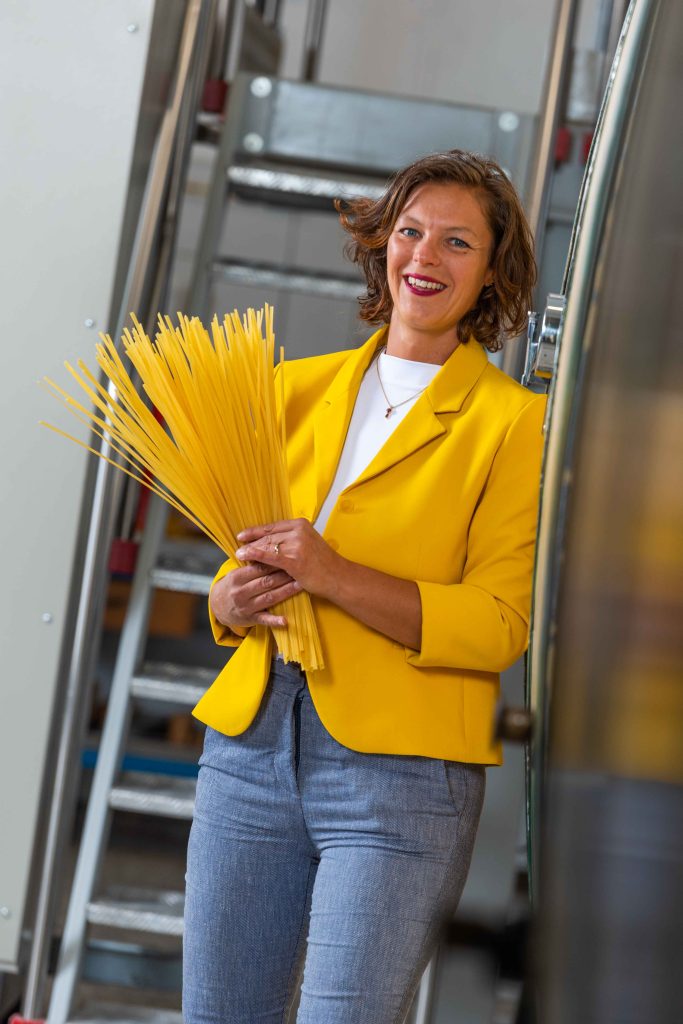





One family. One passion. Five generations of Carinthian pasta tradition.
The history of Finkensteiner pasta is inextricably linked to the Gregori family. Since 1882, we have been dedicated to producing the finest pasta—and thus a piece of Austrian food culture. What began with the courage and vision of a young man is now being continued in the fifth generation.

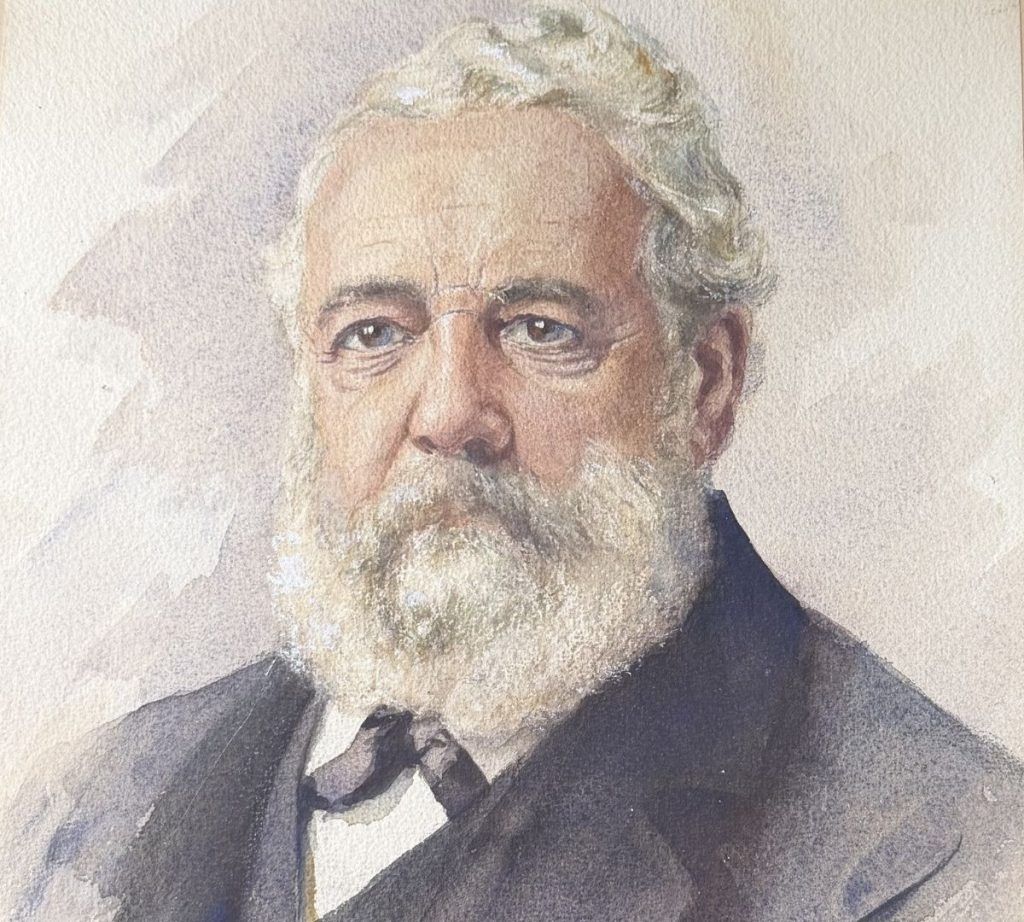
Giuseppe Gregori - a pioneer with a vision
Giuseppe Gregori, the great-great-grandfather of the current owner Katharina Gregori, was born in Riva on Lake Garda. His entrepreneurial spirit was evident from an early age: he earned his first money as a goat herder, trading cheese and wine.
With ten children and a tremendous drive, he founded the first pasta factory on Austrian soil in Bolzano in 1882, laying the foundation for what is now Austria's oldest pasta factory.
(If traditional accounts are correct, the Bolzano City Cinema stands on this site today.)
With his intuitive sense for quality, craftsmanship, and market needs, Giuseppe laid the foundation for a success story that continues to this day.
Relocation to Carinthia - new location, new opportunities
With growing success, the factory in Bolzano soon became too small. A new site had to be found – one with sufficient space and an energy source for the machines.
And so the Gregori family set out in search of a new location – and found it in Carinthia.
In 1907, Giuseppe's son Rudolf signed the contract to purchase an old hammer mill in Finkenstein am Faaker See, which already had its own hydroelectric power plant. Two years later, in 1909, production began at this location – the very same place where Finkensteiner pasta is still made today.
The relocation of the pasta factory to Carinthia also came at a time of major infrastructure projects such as the Tauern and Karawanken tunnels – symbols of the dawn of a new industrial era. Finkensteiner was part of this progress, which brought continuous growth to the business over the following decades.
At its peak, the Gregori family had up to 67 employees and was an important employer in the region. A specially appointed night watchman also kept an eye on the engines and machines – testimony to the value and labor-intensive nature of pasta production at that time.
Innovation with heart and common sense - The 1930s
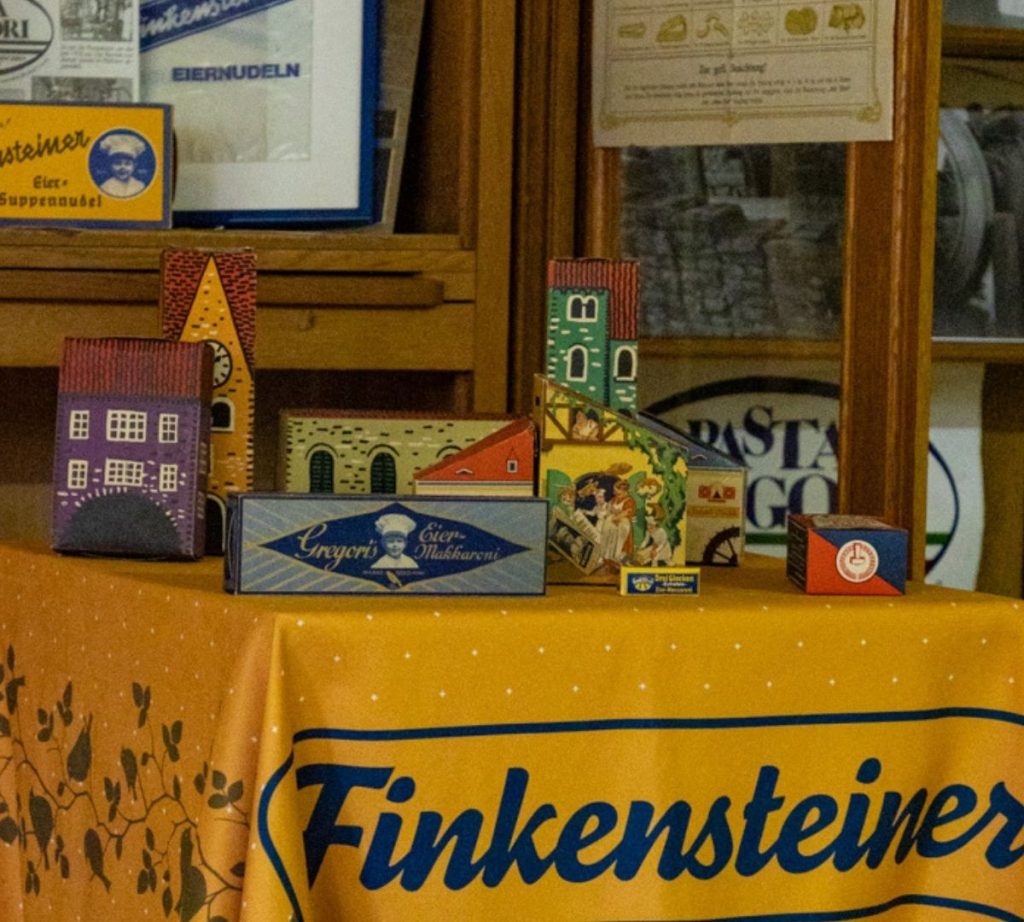
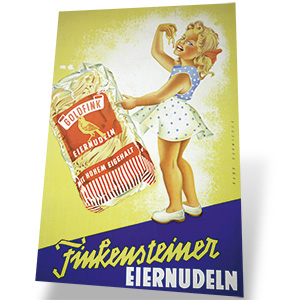
Creativity and a passion for innovation have always been part of the family’s DNA. In 1935, Rudolf Gregori developed a creative and truly unique packaging concept that made children's hearts beat faster:
Entire cities and castles could be built from the differently sized pasta boxes – complete with town halls, clock towers, and houses of various sizes.
These “building block boxes” quickly became popular collectibles and helped make Finkensteiner well known far beyond Carinthia.
Times of change - post-war years and a new beginning
The post-war period brought challenging years. Orders declined and raw materials were scarce. Letters and correspondence from this period attest to the family's determination to keep production going and safeguard jobs.
With tremendous dedication and solidarity, the company weathered this challenging phase – and with hard work, passion, and an unwavering belief in their product, laid the foundation for renewed growth and future success.
Generational change and modernization
Over the decades, the company has always remained in family hands.
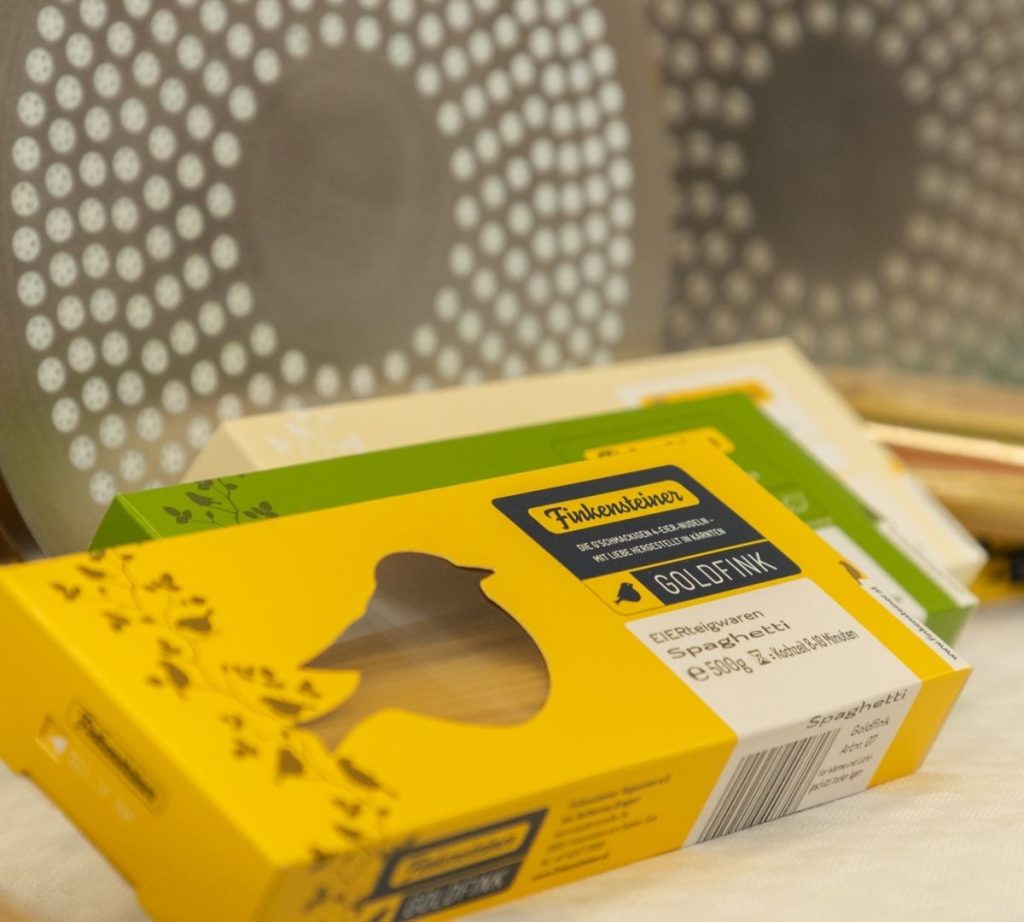
Production was continuously modernized—new machines were introduced, but the core values remained unchanged: quality, regionality, and craftsmanship.
This remained the case when Sigrid Gregori took over the management from her husband Lenz in 1995 and continued to modernize the production process.
In 2006, her sister Ulrike Fleissner opened the popular Marktcafé with direct sales. For 20 years now, it has been a beloved meeting place for Finkensteiner fans from near and far.
Today - Carinthian pasta varieties in fifth generation
On the occasion of the company’s 130th anniversary in 2012, Sigrid Gregori prepared to hand over the reins to her daughter..
Since taking full ownership in 2013, Katharina Gregori has been running the family business in its fifth generation, together with her dedicated team of nine employees.
With fresh ideas and modern production methods - but the same passion as more than a century ago - she continues the legacy of her great-great-grandfather.